

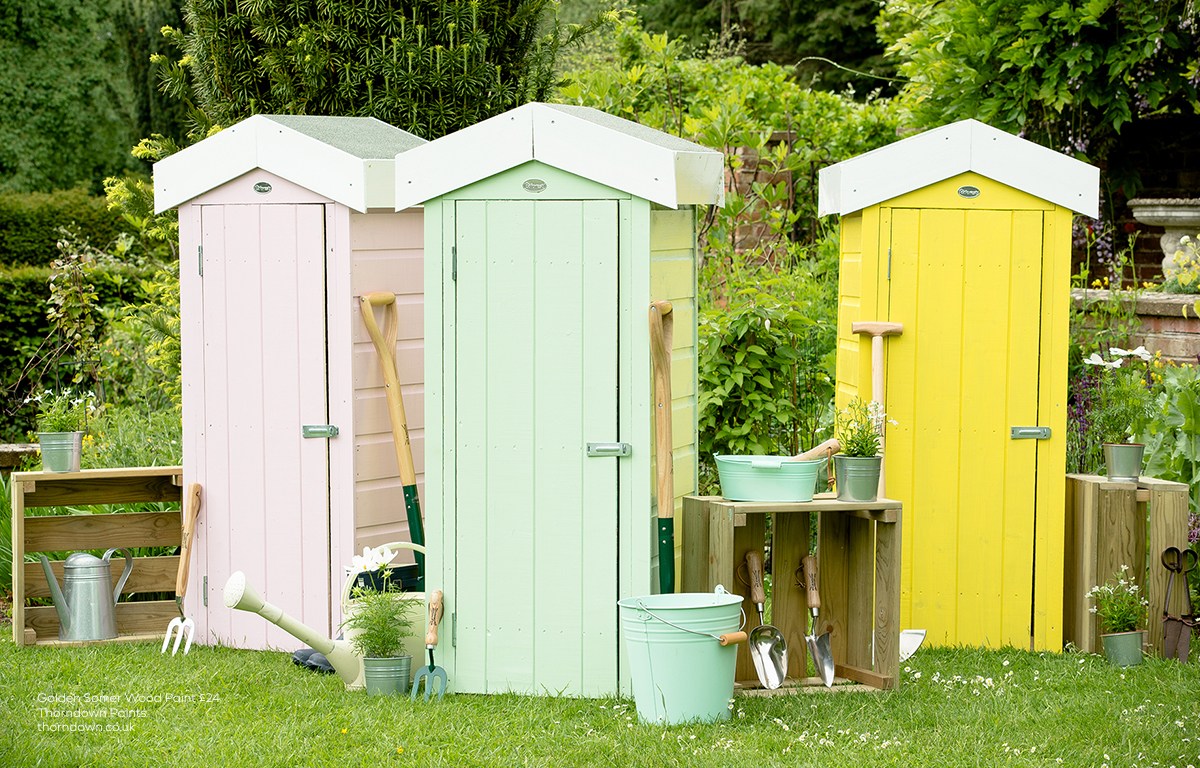
Once upon a time, the garden shed knew its place. It stood at the end of the lawn, slightly listing, smelling of creosote and damp compost, its windows veiled with cobwebs and its interior devoted to the noble storage of things nobody quite knew what to do with. There were blunt secateurs, three nearly empty tins of fence paint, a deckchair with complicated emotional baggage and, inevitably, a lawnmower that refused to start.
How things have changed.
The humble shed has undergone one of the more remarkable domestic reinventions of recent years. No longer merely a repository for tools and half-used bags of John Innes (other composts are available), it has become an extra room in all but postcode: office, gym, studio, teenage den, reading retreat and occasionally somewhere to hide with a cup of tea while pretending not to hear anyone calling from the house.
We have, in short, discovered the bottom of the garden.
Partly, this is practical. As homes have been asked to work harder, so too have gardens. The rise of home and hybrid working made the need for a proper workspace suddenly rather pressing, particularly for anyone who had attempted to conduct a serious meeting from one end of the kitchen table while lunch was being assembled at the other.
But the appeal of the new garden room goes beyond gaining a few extra square metres. There is something deliciously escapist about stepping outside the back door and walking to work through the garden. Even a commute of twelve paving slabs can provide a useful psychological shift. Close the door behind you and the washing machine, unanswered post and mysteriously sticky kitchen surfaces belong to another world.
From potting shed to polished retreat
Today’s garden buildings span everything from handsome timber cabins and converted outbuildings to sharply contemporary glass boxes that appear to have wandered out of an architect’s portfolio and settled among the hydrangeas.
Yet the most appealing examples retain something of the shed’s original character. Timber cladding, pitched roofs, exposed rafters and generous windows give these rooms a pleasing informality. They needn’t feel like miniature suburban houses transplanted onto the lawn. A garden room should, ideally, still feel connected to the garden.
That relationship is part of the pleasure. A desk positioned towards a window gives you the changing light, the movement of grasses and the occasional blackbird conducting important business on the lawn. French doors thrown open in summer turn an office into something closer to a pavilion; in winter, good insulation, warm lighting and a small stove or efficient heater make the same space wonderfully cocooning.
And because these rooms are physically separate from the main house, they invite a little more decorative bravery. Wallpaper that might seem too exuberant for the sitting room suddenly feels entirely reasonable in a garden studio. A ceiling can be painted dark green. Walls can disappear beneath books, prints and collected objects. Vintage furniture sits happily beside contemporary joinery. The best ones feel assembled rather than installed.
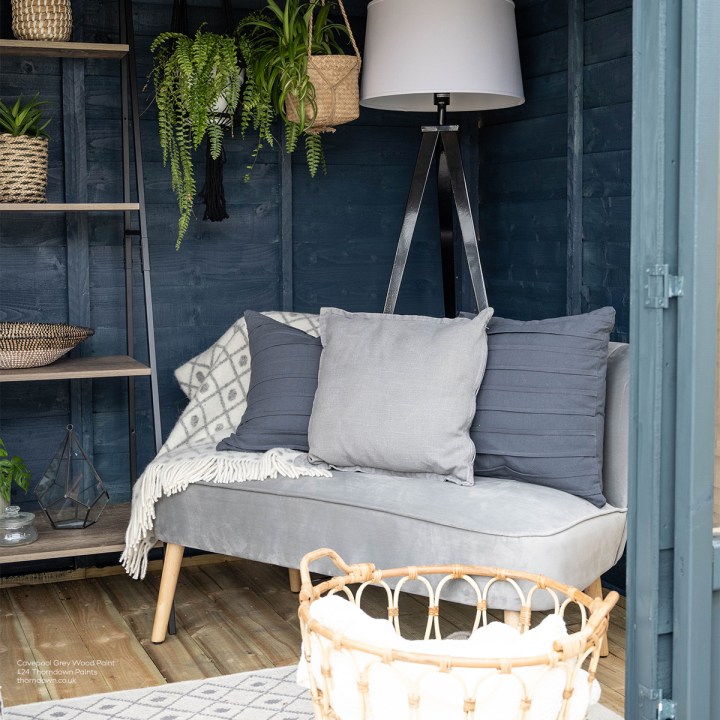
Working from shed
Inevitably, the garden office has become the poster child for the shed renaissance. There is much to recommend it: privacy, daylight and the satisfying ability to shut an actual door on work at the end of the day.
But the mood needn’t be corporate. In fact, please don’t put grey carpet tiles in it unless disciplinary proceedings are already under way. A timber desk, a proper upholstered chair, a rug underfoot and curtains or blinds immediately soften the space. Shelving can hold books as readily as files, while ceramics, art and table lamps give the room the layered character of an interior rather than the slightly bleak air of a satellite office.
Natural materials work particularly well because they echo what lies beyond the windows: oak, cork, linen, wool, rattan and painted timber. The palette can follow suit, from moss and olive to tobacco, ochre and chalky off-whites. Then again, a garden room is also an excellent place for cobalt blue, tomato red or a wallpaper involving improbable quantities of foliage. Nobody ever went to the bottom of the garden in search of beige.
The new home gym
The shed’s transformation into a gym is another neat bit of domestic evolution. Exercise equipment has always presented something of an interiors problem. A treadmill possesses many virtues, but visual delicacy is not among them.
Moving the machinery outside frees the spare bedroom from its career as an accidental leisure centre and creates a dedicated place to exercise. The best garden gyms, however, are moving away from the black-rubber-floor-and-mirrored-wall aesthetic of commercial fitness clubs.
Timber walls, limewashed finishes and warm neutral colours can make the room feel calmer; large windows and doors bring in daylight and garden views. Storage earns its keep here, swallowing weights, mats and resistance bands so that the space can switch from energetic morning workout to quiet evening yoga without resembling the aftermath of a PE lesson.
There is something particularly civilised about exercising with doors open to the garden, especially when accompanied by birdsong rather than fluorescent lighting and somebody else’s aggressively motivational playlist.
Somewhere for everybody else
Perhaps the cleverest development is the garden room as hangout: a place neither quite indoors nor outdoors and, crucially, slightly removed from parental headquarters.
For teenagers, this distance is gold dust. A garden den offers independence without requiring anyone to move to another postcode. Give it a sofa deep enough for sprawling, robust rugs, decent speakers, plenty of charging points and lighting that can shift from practical to atmospheric. Add a small fridge and you may not see them until university.
These spaces work just as well for adults. A compact garden sitting room can become somewhere to read, listen to music or entertain friends on summer evenings. Think low seating, tactile cushions, piles of books and perhaps a drinks trolley with aspirations above its station.
There is freedom in furnishing a room without having to account for the rest of the house. That battered leather chair nobody else likes? Perfect. The enormous botanical print bought at a flea market? At last, its moment. Garden rooms tolerate eccentricity beautifully.
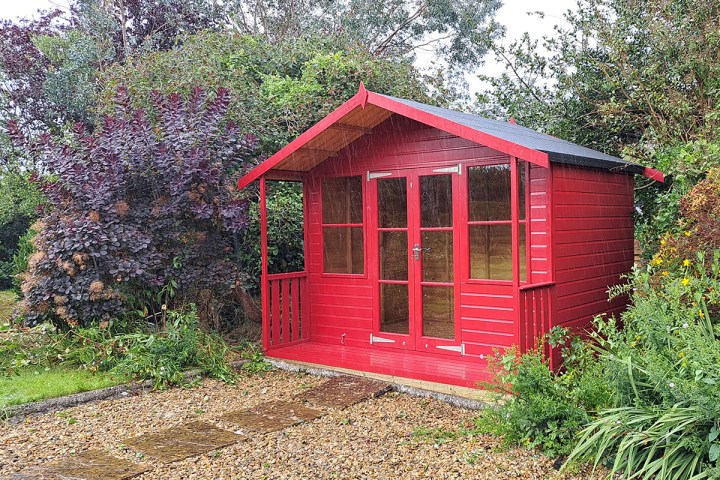
A room of one’s own
Studios and studies tap into another, older desire: the appeal of having a small place dedicated to thought and making.
Writers, painters, musicians and makers have long understood the romance of the shed. Roald Dahl famously wrote in one; George Bernard Shaw had a revolving writing hut designed to follow the sun. There is something about a modest room removed from domestic circulation that encourages concentration.
Contemporary versions might contain an easel, sewing table, pottery wheel or simply a desk and an unreasonable number of books. North-facing glazing can provide useful even light for artists, while built-in shelves make the most of compact dimensions. Peg rails, drawers and cupboards keep materials close to hand without making the room feel overworked.
And scale is not necessarily the enemy. A small room can be wonderfully atmospheric. Painted timber walls, a worn rug, a generous armchair and a pool of lamplight can create far more charm than acres of anonymous space.
The shed grows up
Of course, once electricity, heating, Wi-Fi, plumbing and beautifully made cabinetry enter the conversation, one might reasonably ask whether we are still talking about sheds at all.
Technically, perhaps not. Spiritually, absolutely.
What remains is the idea of a modest building slightly apart from everyday life. The shed has always represented a certain kind of freedom: a place for tinkering, escaping, making and occasionally doing nothing terribly productive. Its modern incarnation simply comes with better insulation.
And that may explain its enduring appeal. As our houses have become places where we work, exercise, socialise and collapse at the end of the day, the garden offers the possibility of creating a room devoted to just one version of ourselves.
A study for thinking. A studio for making. A gym for moving. A den for disappearing.
The lawnmower may have been evicted, but the shed has never worked harder.
If you enjoyed reading this, you may like From Lawn Lines to Lime Margaritas

